Industry-Specific Website Design in Bangladesh: Complete Guide
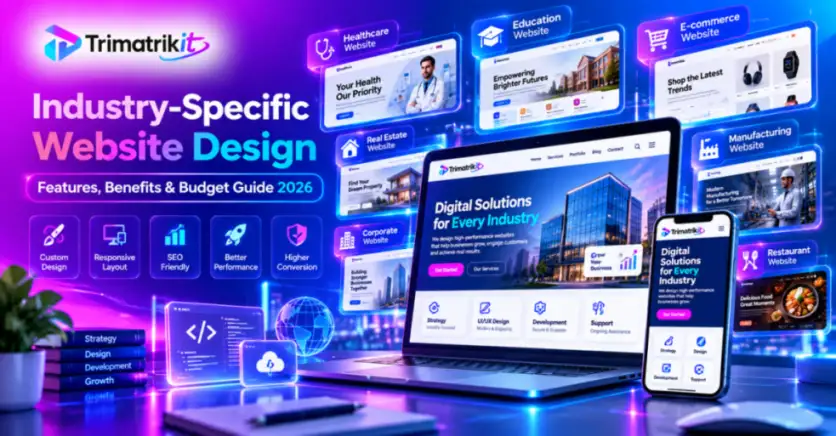
Industry-Specific Website Design in Bangladesh: Features, Benefits, Budget & Complete Guide 2026
In today's competitive digital marketplace, having a website is no longer enough. Businesses need websites that reflect their industry's specific requirements, customer expectations, and operational processes.
A hospital website has different requirements from an e-commerce store. Similarly, a school website requires different features from a real estate agency, manufacturing company, or travel business.
This is where Industry-Specific Website Design and Development becomes important.
An industry-specific website is designed to support the unique services, workflows, and customer needs of a particular business sector.
In this complete guide, we explain what industry-specific websites are, why businesses need them, their essential features, development processes, estimated costs in Bangladesh, and how to choose the right website development company.
1. What Is an Industry-Specific Website?
An Industry-Specific Website is a website designed and developed for the particular needs of a specific industry or business category.
Unlike a general-purpose business website, an industry-specific website may include specialized pages, forms, integrations, dashboards, and operational features relevant to its target sector.
For example, a hospital website may include doctor profiles, appointment booking, department information, and patient inquiry forms.
A real estate website may include property listings, location-based searches, virtual tours, and appointment scheduling.
An educational institution may require admission information, academic calendars, student portals, and examination-related features.
The purpose of industry-specific website development is to create a digital platform that aligns with how a particular business actually operates.
2. Why Does Your Business Need an Industry-Specific Website?
Every industry serves different customers and follows different business processes.
A generic website template may provide a basic online presence, but it may not adequately support specialized services or customer journeys.
Better Customer Experience
An industry-specific website organizes information according to the expectations of its target audience.
Visitors can find relevant services, products, booking options, and contact information more conveniently.
Professional Brand Presentation
A website tailored to your industry can communicate your services more clearly and present your organization professionally.
Industry-Relevant Features
Specialized websites can support functions such as appointments, product catalogs, student admissions, property listings, customer inquiries, or service bookings.
Improved Operational Efficiency
When appropriate, a website can connect with business management systems, reducing repetitive administrative work.
Better Digital Marketing Opportunities
Industry-focused service pages and useful content can help businesses target relevant search queries.
More Effective Customer Conversion
Clear service information and appropriate calls to action make it easier for potential customers to take the next step.
3. Types of Industry-Specific Websites
Different business sectors require different website structures and functionalities.
Healthcare and Hospital Websites
Healthcare websites typically provide information about doctors, medical departments, appointment availability, services, locations, and patient communication.
Useful features may include appointment request forms, doctor profiles, department pages, patient information resources, and secure integrations where appropriate.
Healthcare websites should prioritize accessibility, accurate information, privacy, and data security.
School, College, and Education Websites
Educational websites help institutions share academic information and manage communication with students and guardians.
Features may include admission information, class routines, notices, academic calendars, examination schedules, online applications, and student portals.
Advanced platforms may integrate with school management software for attendance, results, and fee management.
E-commerce and Retail Websites
Retail websites support online product discovery and purchasing.
Common features include product catalogs, categories, search filters, shopping carts, checkout systems, order management, and payment integrations.
Inventory synchronization and delivery management may also be important.
Real Estate Websites
Real estate websites showcase properties available for sale, rent, or investment.
Important features include property listings, location filters, price filters, image galleries, inquiry forms, and agent profiles.
Advanced websites may include maps, virtual tours, and appointment scheduling.
Restaurant and Food Business Websites
Restaurant websites typically present menus, location information, operating hours, and contact details.
Depending on business needs, they may include table reservation requests, online ordering, delivery integration, and promotional offers.
Hotel and Travel Websites
Hospitality websites may require room listings, accommodation details, booking requests, availability integration, destination information, and payment functionality.
Travel agency websites may feature tour packages, itineraries, booking inquiries, and customer support options.
Manufacturing and Industrial Websites
Manufacturing companies often require professional product catalogs, technical specifications, company profiles, certifications, factory information, and quotation request forms.
These websites are commonly designed to generate business inquiries rather than direct consumer purchases.
Construction and Engineering Websites
Construction websites showcase completed projects, service categories, company experience, project galleries, and consultation options.
Project case studies can help potential customers understand the company's capabilities.
Corporate and Professional Service Websites
Consulting firms, accounting businesses, legal practices, and other professional organizations may need service pages, team profiles, case studies, contact forms, and appointment scheduling.
The website should emphasize clarity, professionalism, and accurate business information.
Logistics and Transportation Websites
Logistics websites may provide shipment service details, quotation requests, delivery coverage information, and customer support.
More advanced solutions can include shipment tracking, customer accounts, and integration with logistics management systems.
4. Essential Features of an Industry-Specific Website
Although every industry has unique requirements, certain features are important across most professional websites.
Responsive Website Design
The website should adapt to mobile phones, tablets, laptops, and desktop devices.
Professional UI/UX Design
A clean interface, readable typography, consistent branding, and intuitive navigation help visitors use the website effectively.
Industry-Focused Service Pages
Each major service or product category should have a clear, informative page.
Search Engine Optimization
SEO-friendly URLs, descriptive page titles, organized headings, internal links, and useful content help search engines understand the website.
Contact and Inquiry Forms
Customers should be able to submit questions, request quotations, or contact the business conveniently.
Content Management System
A CMS can allow authorized employees to update website content without editing code.
Security and HTTPS
Secure hosting, appropriate access controls, software updates, and HTTPS are important for protecting website operations.
Website Performance
Optimized images, efficient code, and suitable hosting help improve loading performance.
Analytics Integration
Website analytics can provide information about visitor behavior, traffic sources, and important user interactions.
Business System Integration
Depending on the industry, a website may connect with payment gateways, CRM systems, inventory software, booking platforms, or other applications.
5. Industry-Specific Website Features by Business Type
Industry | Common Website Features |
|---|---|
Healthcare | Doctor profiles, appointments, departments, inquiries |
Education | Admission forms, notices, routines, student portals |
E-commerce | Product catalog, cart, checkout, order tracking |
Real Estate | Property listings, filters, maps, inquiry forms |
Restaurant | Digital menu, ordering, reservations, location |
Hotel | Room listings, booking integration, payment |
Manufacturing | Product catalogs, specifications, quotation requests |
Construction | Project portfolio, services, consultation forms |
Corporate Services | Service pages, team profiles, contact forms |
Logistics | Service coverage, quotation requests, tracking integration |
The exact feature list should be finalized through a requirement analysis before development.
6. Step-by-Step Industry-Specific Website Development Process
Step 1: Identify Your Industry and Business Goals
Start by defining your business sector, target audience, and primary website objectives.
For example, a hospital may prioritize appointment requests, while a manufacturing company may focus on quotation inquiries.
Step 2: Research Your Customers
Understand what information customers need and what actions they expect to complete on your website.
Step 3: Analyze Competitor Websites
Review relevant websites within your industry to understand common features, content structures, and user expectations.
Use this research to identify opportunities for a more effective design.
Step 4: Prepare a Website Requirement Document
Document the required pages, features, integrations, content, languages, user roles, and administrative functions.
This document helps the development team estimate the scope accurately.
Step 5: Plan the Website Structure
Create a sitemap covering essential pages such as Home, About, Services, Industry Solutions, Portfolio, Blog, and Contact.
Add industry-specific pages where necessary.
Step 6: Design the User Interface
Develop wireframes and UI/UX prototypes using tools such as Figma.
The design should reflect the company's branding and the needs of its customers.
Step 7: Choose the Right Technology
Select a technology stack based on functionality, maintenance needs, security, and budget.
WordPress may be suitable for many content-focused websites, while custom applications may require frameworks such as Laravel, React, or Next.js.
Step 8: Develop Industry-Specific Features
Build the required functionality, including forms, catalogs, bookings, dashboards, or integrations.
Step 9: Implement SEO and Performance Optimization
Optimize the website structure, content, images, loading performance, and mobile experience.
Step 10: Test the Website
Check functionality, usability, mobile responsiveness, accessibility, security, and browser compatibility.
Step 11: Launch the Website
Configure hosting, domain, HTTPS, analytics, and search engine indexing settings.
Step 12: Maintain and Improve
Regularly update content, monitor performance, apply security patches, and improve features as business requirements evolve.
7. Industry-Specific Website Development Cost in Bangladesh
One of the most common questions is: How much does an industry-specific website cost in Bangladesh?
The answer depends on the number of pages, design complexity, integrations, custom features, and long-term support requirements.
The following figures are illustrative planning estimates in Bangladeshi Taka, not verified market quotations or official Trimatrik IT prices.
Website Type | Illustrative Budget (BDT) |
|---|---|
Basic Industry Business Website | ৳15,000–৳35,000 |
Professional Corporate Website | ৳35,000–৳80,000 |
School or Education Website | ৳25,000–৳75,000 |
Hospital or Clinic Website | ৳35,000–৳100,000 |
Real Estate Listing Website | ৳50,000–৳150,000 |
E-commerce Website | ৳40,000–৳150,000 |
Hotel or Booking Website | ৳50,000–৳180,000 |
Custom Industry Web Application | ৳100,000–৳500,000+ |
These estimates are intended only to illustrate how scope can affect cost. Actual proposals may be substantially higher or lower.
Domain registration, hosting, premium plugins, third-party services, payment gateway fees, content creation, maintenance, and taxes may be charged separately.
A detailed requirement document is the most reliable starting point for receiving an accurate quotation.
8. What Factors Affect Website Development Cost?
Website pricing depends on several technical and business considerations.
A small informational website with a few pages usually costs less than a website with complex booking functionality, user accounts, or custom reporting.
Custom UI/UX design can increase project effort compared with adapting an existing template.
Integration with payment gateways, ERP platforms, CRM software, or inventory systems can require additional development and testing.
Multilingual support, advanced search filters, content migration, and complex administrative dashboards may also affect the budget.
Security requirements, hosting architecture, and long-term support arrangements should be considered when calculating the total cost of ownership.
9. Ready-Made Website vs. Custom Industry-Specific Website
A ready-made website template can be a practical option for businesses that need a simple website with standard features.
Templates can reduce initial design time and may provide a lower-cost starting point.
However, they may require customization to match specific branding, workflows, or integration requirements.
A custom industry-specific website provides greater flexibility in design, functionality, and architecture.
Custom development is often more suitable when the business requires specialized processes, complex integrations, or unique customer experiences.
The right choice depends on business goals, available budget, maintenance capacity, and expected future requirements.
10. How Long Does It Take to Develop an Industry-Specific Website?
Development timelines depend on the project's complexity and how quickly requirements, content, and feedback are finalized.
A basic informational website may take approximately one to three weeks under straightforward conditions.
A professional corporate website with custom design and multiple content sections may take several weeks.
Websites with e-commerce, booking, customer accounts, or third-party integrations can require one to three months or longer.
Complex industry-specific applications may take several months, particularly when extensive testing, integrations, or multiple development phases are required.
These timelines are broad planning examples rather than guaranteed delivery schedules.
11. Where Should You Build an Industry-Specific Website in Bangladesh?
Businesses in Bangladesh can choose between freelancers, web design agencies, and specialized software development companies.
A freelancer may be suitable for a small website with limited functionality and a clearly defined scope.
A professional web design agency may be appropriate for businesses that need branding, UI/UX design, responsive development, and ongoing website support.
A software development company may be preferable when the project requires custom dashboards, databases, user roles, payment integration, or business management functionality.
Before selecting a provider, review relevant projects, request demonstrations, clarify the development scope, and confirm support arrangements.
It is also important to discuss domain ownership, hosting access, source code ownership, security, and maintenance responsibilities.
The best development partner is the one that can deliver the required functionality within an agreed scope and provide appropriate long-term support.
12. Why Consider Trimatrik IT for Industry-Specific Website Development?
Trimatrik IT focuses on modern web design, web development, and business-oriented digital solutions.
Its portfolio direction includes professional business websites, e-commerce platforms, education management solutions, HR and payroll systems, and inventory management applications.
An effective industry-specific website project begins with understanding the client's business processes and identifying the features that will provide the most practical value.
Trimatrik IT's design approach emphasizes modern UI/UX, responsive layouts, organized content, and digital experiences aligned with business needs.
Businesses considering a project should discuss their requirements, review relevant portfolio demonstrations, and request a quotation based on the actual development scope.
13. Common Mistakes to Avoid When Building an Industry-Specific Website
A common mistake is choosing a website design based only on appearance without considering business functionality.
Another problem is starting development without a clear requirement document.
Businesses may also underestimate the importance of mobile responsiveness, content quality, security, website performance, and maintenance.
Adding too many unnecessary features can increase cost and make the website harder to use.
A better approach is to prioritize essential functionality, launch a reliable initial version, and expand the website based on actual business needs.
14. Frequently Asked Questions
What is an industry-specific website?
An industry-specific website is a website designed to meet the unique requirements, services, and customer expectations of a particular business sector.
Why is an industry-specific website important?
It helps businesses present relevant information, provide specialized functionality, and create a more appropriate user experience.
How much does an industry-specific website cost in Bangladesh?
Costs vary by project scope. Simple websites may require a relatively modest budget, while custom applications with advanced integrations can cost significantly more.
Which industries benefit from specialized websites?
Healthcare, education, e-commerce, real estate, manufacturing, construction, hospitality, logistics, and professional services can all benefit from industry-focused website design.
Can an industry-specific website include custom software?
Yes. Depending on requirements, it can integrate with or include custom management systems, booking platforms, payment services, customer portals, and reporting dashboards.
Is WordPress suitable for industry-specific websites?
WordPress can be suitable for many content-driven websites. Projects with complex workflows or specialized requirements may benefit from custom development.
How do I choose a website development company?
Review relevant experience, project demonstrations, technical expertise, communication, pricing transparency, security practices, and maintenance support.
Can Trimatrik IT develop an industry-specific website?
Trimatrik IT's portfolio covers web design, development, and business-focused digital solutions. Contact the team to discuss your industry requirements and confirm the appropriate development approach.
15. Conclusion
An Industry-Specific Website is more than a standard business website. It is a digital platform designed around the needs of a particular industry, its customers, and its operational processes.
Whether you operate a hospital, school, retail store, manufacturing company, real estate business, restaurant, or corporate organization, the right website can help present your services professionally and simplify important customer interactions.
Before investing in development, identify your business goals, define essential features, prepare a realistic budget, and select a qualified development partner.
For businesses exploring Industry-Specific Website Design in Bangladesh, Trimatrik IT offers a digital solutions portfolio focused on modern design and business-oriented functionality.
Build a Website Designed for Your Industry
Your Industry Is Unique. Your Website Should Be Too.
Contact Trimatrik IT to discuss your business requirements, explore suitable website features, and request a project-specific quotation.
Trimatrik IT — Your Digital Growth Partner.
- #تجريبي
التعليقات
سجّل الدخول كعميل لترك تعليق.